
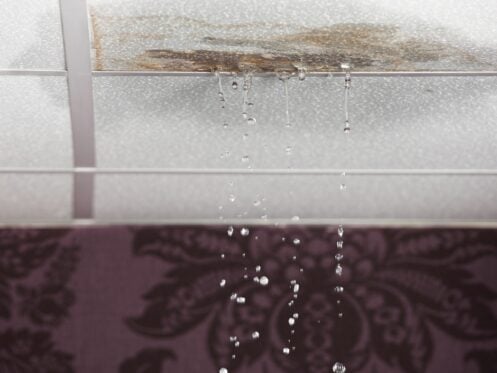
Water leaking from the ceiling when it rains? If water shows up only during rain, the source is usually the roof, flashing, or gutters, even if the drip appears far from the actual entry point. Water can travel along rafters and insulation before it finally drips, so the spot you see inside is rarely the true entry point.
Step 1: Treat it like an electrical hazard first
If water is near a ceiling light, outlet, or any wiring, shut off power to that area at the breaker. Water and electricity do not negotiate. A home electrical safety checklist from a US government publication recommends turning power off at the circuit breaker in hazardous situations.

Step 2: Catch the water and protect your stuff
-
Move furniture, electronics, rugs, and anything valuable out of the drip zone.
-
Put a bucket under the leak.
-
Lay towels around the bucket to stop splash damage.
Step 3: Document it for insurance

Take clear photos and a short video:
-
The ceiling stain or active dripping
-
Any wet insulation, attic areas, or visible roof issues if safe
-
Damaged items below
Step 4: Start drying fast to reduce mold risk
Drying quickly matters. The EPA notes that if wet materials are dried within 24 to 48 hours, in most cases mold will not grow.
The CDC gives similar guidance on drying fully and quickly within 24 to 48 hours after water exposure.
Use what you have:
-
Fans aimed across the wet area (not directly into a soaked ceiling cavity)
-
Dehumidifier if available
-
Keep doors open to improve airflow
If the ceiling is sagging, bubbling, or feels soft, stop and call a pro. Wet drywall can collapse.
Why It Leaks Only When It Rains
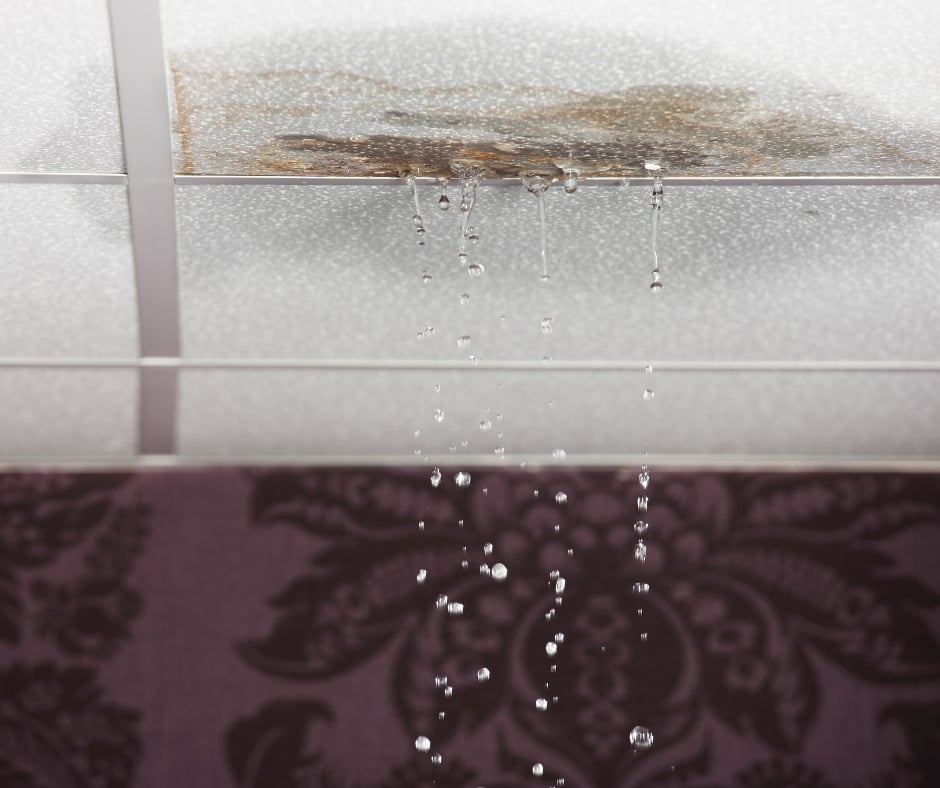
A ceiling leak during rain almost always means water is entering from above, then traveling along framing until it finds a low point and shows up in your ceiling.
Common causes:
-
Damaged or missing shingles
-
Worn or failed flashing around chimneys, walls, or valleys
-
Cracked pipe boot or vent flashing around plumbing vents
-
Clogged gutters causing water to back up under roofing edges
-
Skylight flashing failure
-
Roof decking damage from an older leak
Roof and pipe flashing failures are a very common culprit, especially around vent pipes where rubber boots crack or shrink over time.
How To Narrow Down the Source (Safely)
If you want to be useful instead of just stressed, here is the safe version of investigating.
Check the ceiling pattern
-
One circular stain usually means water is pooling above that spot.
-
A long stain line often means water is traveling along a joist.
Look in the attic only if it is safe
Only do this when the rain is active or right after, because dry weather hides the trail.
-
Bring a flashlight
-
Look for shiny wet wood, dripping nails, wet insulation
-
Follow the wet trail uphill toward where it likely enters
Important: The drip point inside the house is often not directly under the roof entry point. Water can travel.
Look at likely roof entry points
Focus on:
-
Chimney area
-
Roof valleys
-
Skylights
-
Plumbing vent pipes
-
Any wall to roof intersections
What Not To Do
-
Do not keep flipping the light switch “to test it” if water is near a fixture.
-
Do not ignore it until the next storm. Each rain event increases damage.
-
Do not paint over the stain. That is cosmetic denial, not a repair.
-
Do not assume it is “just a small leak.” Small leaks often cause big mold and rot problems over time.
When To Call a Pro Immediately

Call right away if any of these are true:
-
Water is coming through a light fixture or near electrical
-
Ceiling is sagging, bubbling, or cracking
-
You see wet insulation across a wide area
-
The leak returns every time it rains
-
There is a musty odor, which can indicate moisture staying trapped
Fixing the Ceiling Stain After the Roof Leak Is Repaired
Do this only after the leak source is fixed and the area is fully dry.
-
Cut out and replace any soggy drywall
-
Replace wet insulation
-
Prime with a stain blocking primer
-
Repaint
Drying quickly matters because mold risk climbs when moisture sticks around. Again, EPA and CDC both emphasize drying within 24 to 48 hours.
FAQ
Why is water leaking from my ceiling only when it rains?
Because rainwater is entering through the roof system, often at flashing, pipe vents, valleys, skylights, or gutters, then traveling until it drips into the ceiling.
Can a ceiling leak cause mold?
Yes. Mold can begin growing when materials stay wet. EPA and CDC guidance emphasizes drying within 24 to 48 hours to reduce mold growth risk.
Is it dangerous if water is leaking near a ceiling light?
It can be. Shut off power to the affected area at the breaker and avoid touching the fixture or water. Electrical safety guidance commonly emphasizes shutting off power at the circuit breaker in hazardous conditions.
Will the leak stop on its own?
Only if the rain stops. The underlying roof entry point is still there, and it usually gets worse with the next storm.
Need Help Right Now in Indianapolis?
If water is leaking from your ceiling when it rains, the priority is simple: stop the water, protect the home, and dry it fast before mold and structural damage get expensive.
If you’re in Indianapolis or surrounding areas, Indy Roof & Restoration can help with:
Roof leak inspection and repair
Emergency water mitigation and drying
Documentation support for insurance
Call now or request an free inspection, 24/7 emergency response available.
